



Поділитися:


 201
201  1 min.
Real Estate Purchase and Sale Agreement — From Due Diligence to Final Signing
Article by Ivan Topor, Head of the Real Estate and Construction Practice at the DE JURE Law Firm, attorney-at-law and Candidate of Legal Sciences, on key nuances of real estate purchase and sale agreements.
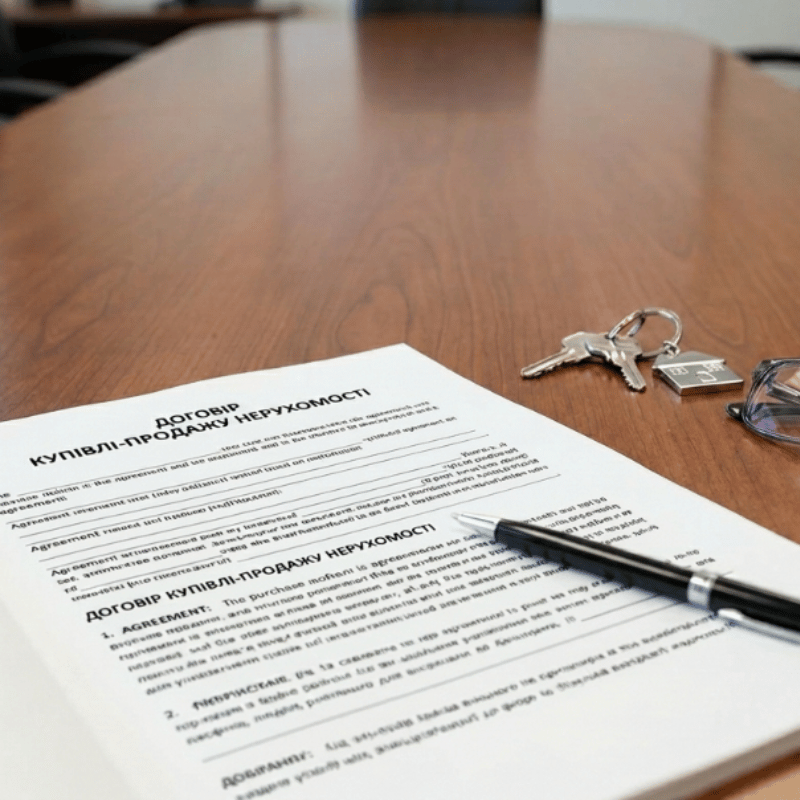
We continue our series of practical recommendations for buyers and investors on various real estate acquisition options. Today, we examine the entire process leading up to the signing of a real estate purchase and sale agreement.
Preparatory Stage
This stage should be divided into three key components: verification of the property owner, examination of the property itself, and analysis of any litigation or encumbrances related to the property. From the seller’s perspective, it is also important to verify the buyer and assess their financial capacity. This can be done independently through public registers or by ordering a comprehensive legal due diligence review.
Negotiation of Transaction Terms
The agreement should equally consider and protect the interests of both parties — the seller and the buyer. At this stage, the parties agree on mutual guarantees, payment procedures, confirmation of the absence of claims regarding the condition of the property, and clear identification details of the parties involved.
Notarization and State Registration of the Transfer of Ownership
When comprehensive legal support is provided, an attorney or legal advisor is involved in the process to assess potential risks and ensure the correctness of all documentation and procedures.
Agreement on Taxes and Transaction Costs
At the final stage, the parties should agree in advance on the payment of taxes, fees, and other related expenses. It is important to take into account legal requirements regarding transaction taxation, state duties, notary fees, and other mandatory payments.
The execution of a real estate purchase and sale agreement is a complex process that requires thorough risk assessment, careful negotiation of terms, and proper documentation. High-quality legal preparation helps the parties avoid future disputes, ensure transparency of the transaction, and protect their financial interests.


