Divorce is the formal termination of a marriage, which includes issues such as the division of joint property, child custody, and child support. The divorce process in Ukraine can be complicated, especially if the spouses have disputes. It is important to consult a lawyer to navigate this complex process.


to the lead lawyer
The reputation of DE-JURE is confirmed by 14 years of experience in successful legal practice. We offer a number of advantages for our clients:
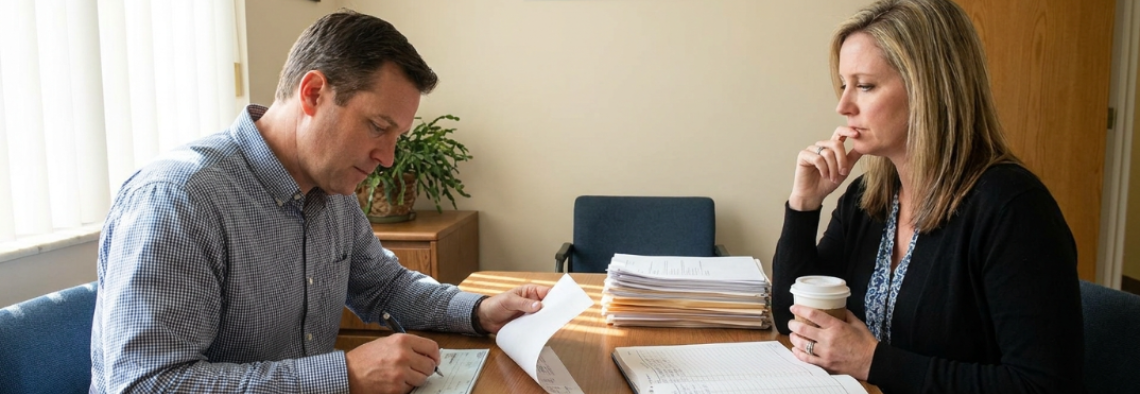
Divorce lawyers accompany the client at every stage of the process, providing assistance and support.
A divorce is a legal procedure for terminating a marriage. In Ukraine, divorce can be filed through the Civil Registry Office or the court, depending on the situation. If the spouses do not have minor children and both agree to a divorce, they can file an application with the Civil Registry Office to file a divorce in an expedited manner. This procedure takes about a month.
If one of the spouses is against the divorce or the couple has minor children, the process goes through the court. In such cases, it is necessary to draw up and file a statement of claim for divorce.
For those who are abroad or cannot be present in court in person, our company provides the opportunity to conduct the case remotely. In this case, the lawyer participates in the court, submits all the necessary documents instead of the client and informs him about the conduct of the case. This is especially important if it is necessary to file a divorce in Ukraine during wartime. “DE-JURE” is ready to help even foreign citizens if their marital relationship is related to Ukraine.
Division of jointly acquired property is a process that requires attention to detail and a professional approach. Our company offers full support, starting from collecting documents for notarization to preparing a statement of claim on the division of marital property. Disputes often arise about the division of real estate, cars, bank deposits, and sometimes even shares in the authorized capital of a company.
Voluntary division of property during divorce through a notary is possible if the parties have reached an agreement. In this case, lawyers participate in negotiations, prepare documents and accompany clients to signing, ensuring legal clarity and psychological support.
If an agreement cannot be reached, the issue is resolved through the court. The trial lasts on average from 8 months to a year, sometimes longer if one of the parties delays the consideration. The court takes into account the law according to which property is divided in half. However, modern judicial practice sometimes allows the division of objects according to the formula “one object – one owner”. For example, the house goes to the wife, and the apartment to the husband. This allows you to avoid being tied to joint ownership of property.
The statute of limitations for the division of property is three years, which makes timely contact with a lawyer especially important. An experienced lawyer not only draws up documents, but also formulates a legal position, providing evidence in court so that the client receives the most favorable decision.
Our specialists take on not only the legal, but also the psychological burden, supporting the client and helping to go through the process with confidence and obtain a court decision on divorce. Working with lawyers allows you to minimize stress and lengthy legal proceedings.
Alimony collection is a process aimed at ensuring the financial support of a child. The legislation provides for the collection of alimony in lawsuit proceedings. If the alimony payer has an official monthly income, for example, a salary or pension, collection is possible in a simplified manner through a court order. This process lasts several months, requires a minimum set of documents and does not involve the participation of the parties in court hearings. A court order allows you to quickly assign alimony as a share of income – for example, one quarter for one child, one third for two and one half for three or more children.
If it is necessary to collect a fixed amount, for example, 10-20 thousand hryvnias per month, lawsuit proceedings are used. In this case, it is necessary to provide the court with evidence of expenses for the child and the payer’s income. The process is more complicated, requiring the collection of documents, participation in hearings, as well as the possible involvement of a lawyer to draw up requests and prepare evidence.
Judicial collection of alimony is possible both from the person with whom the child lives, and from the payer, if he wants to officially fix the amount of payments. But before applying for alimony, it is necessary to officially formalize the divorce through the court or in a simplified procedure.
Deprivation of parental rights is an extreme measure that can be resorted to only if there are good reasons. It is impossible to simply file for divorce through the court and then demand the deprivation of parental rights due to personal conflicts. The court makes the following decisions if the father or mother:
The procedure begins with filing a lawsuit with the court. Before doing so, it is necessary to consult a lawyer who will help determine whether there are sufficient grounds for deprivation of parental rights and what evidence will be required. These may be witness statements, certificates from medical and educational institutions, characteristics from the place of work or residence.
Often, the issue of deprivation of parental rights arises when the father or mother does not participate in the child’s life for a long time. The other person wants to secure the child’s future or give the new partner the opportunity to adopt the child.
It is important to remember that the deprivation of parental rights does not exempt from the obligation to pay child support. The court always proceeds from the interests of the child, not from parental conflicts.
When divorcing through the court with children, one of the most important issues is determining their place of residence. This is especially relevant if there is a dispute between the parents about who the child will live with. Even in the absence of a conflict, many parents prefer to document the child’s place of residence to prevent possible disputes in the future.
Until the child reaches the age of 14, the issue is resolved in court or through guardianship authorities, but lawyers recommend going to court immediately to obtain a legal decision.
Having a court decision on the place of residence of a child helps protect the interests of the parent with whom the child lives. For example, if a mother or father takes the child away without consent, a documented court decision can be the basis for its return and prevent further violations of rights.
There is an opinion that filing a lawsuit about the place of residence can provoke a conflict between parents. However, in some cases, this is a necessary preventive measure that allows you to avoid difficult situations in the future.
Legal support in such cases helps to properly prepare documents, prove the child’s actual residence with one of the parents and protect his interests in court.
Lawyers of the company “DE-JURE” have not only professional knowledge, but also personal experience in divorce proceedings, which allows them to approach each case as delicately as possible. To find out how much a divorce through the court, property division services or alimony collection costs, please contact the phones listed on the website.







Leave a request and we will contact you in the near future


