If a dispute arises regarding acknowledgment of paternity and there is a need to contest it and change the father’s details on the birth certificate, it is advisable to seek legal advice and file a claim with the court.


to the lead lawyer
The legal relationship between the mother, father, and child arises from the moment it is officially certified — when the relevant entry is made in the birth registration records. If the parents are married, the mother’s husband is automatically recognized as the father. If the parents are in a civil partnership, the entry is made on the basis of a joint application for acknowledgment of paternity, and the child is registered under the father’s surname.
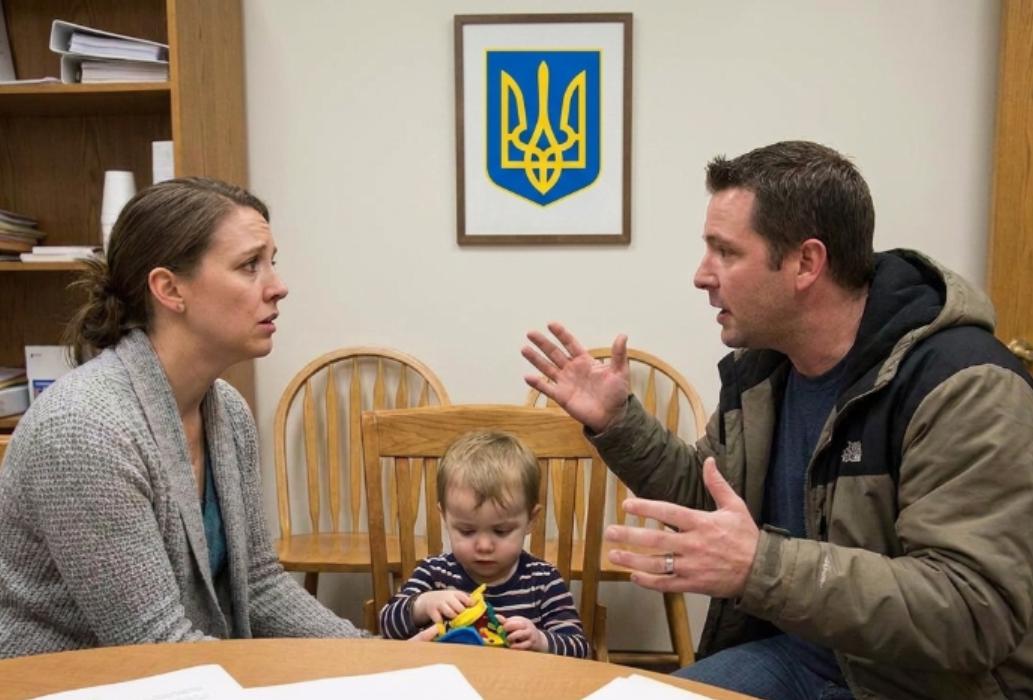
Acknowledgment of paternity is the official confirmation that a person is the father (more rarely, the mother) of a child, with the relevant information entered into the birth certificate. However, there are cases where a person does not consider themselves to be the child’s father. In such circumstances, they may file a claim with the court to contest paternity and request that their information be removed from the birth record maintained by the Civil Status Registration Office.
Cases concerning the establishment of paternity can be divided into two categories: if a person is registered as the father but believes they are not the child’s father, this constitutes contestation of paternity; if a person is not registered as the father but believes they are the child’s father, this constitutes acknowledgment of paternity.
If there is no statement from the father at the time of the child’s birth, but both parties agree, the matter can be resolved by the Civil Status Registration Office. The Civil Status Registration Office may also make minor corrections, such as correcting errors in a surname. Other matters, such as removing a paternity record when there is no consent, are handled by the court. Generally, when a couple is married, the husband is presumed to be the child’s father. However, if he discovers that the child is not biologically his, he may contest paternity in court and have his name removed from the record.
In a civil partnership, a man cannot be registered as the father without his consent due to statutory restrictions. If a man believes that he is not the child’s father after being listed on the birth certificate, he may contest the entry identifying him as the father in court.
Under the Family Code of Ukraine (as of July 2026), paternity may be established or contested through judicial or out-of-court (voluntary) procedures. The father of a child may also be registered based on the mother’s statement if paternity has not been acknowledged and the man and woman are not married. In particular, paternity may be established in the following ways:
A claim to establish paternity may be filed from the moment of the child’s birth until the child reaches the age of majority. Such a claim cannot be filed if the child has died.
During the initial consultation concerning contestation of paternity, a family law attorney discusses the matter with the client, identifies the reasons why the client does not consider himself to be the child’s father, and looks for evidence supporting his position. Ideally, it is possible to collect initial evidence showing that the dispute is not unfounded. The key evidence in such cases is a court-ordered forensic examination to establish biological relationship. A DNA paternity test can also be conducted at a medical institution.
In cases involving establishment of paternity by a court decision, the primary evidence is not documentary evidence but a court-ordered forensic examination to establish biological relationship. However, certain documents may help demonstrate that there are grounds for the dispute:
If a man believes that he is the child’s father, he must prove that he and the woman were in a relationship.
As part of legal support, a paternity attorney helps collect initial evidence, where available, including witness statements, photographs, registration records, and other relevant materials. After the case is brought before the court, a forensic examination to establish biological relationship is ordered. Difficulties may arise at this stage if one of the parties refuses to cooperate. For example, the mother may refuse to have the child undergo a DNA test, or the father may not consider the test necessary.
In such circumstances, the court may order the parties to undergo DNA testing. If a person fails to comply with a court order concerning actions they are required to take, the court may take this into account when deciding the case and may draw an inference against that person.
For establishing paternity through the court, the primary evidence is the conclusion of a court-ordered forensic examination to establish biological relationship. The following may also be submitted as evidence:
Paternity acknowledgment and contestation cases are generally heard by a local general court at the registered place of residence of the mother or father.
The outcome of court proceedings may be either recognition of a person as the child’s father or the removal of information identifying that person as the father from the child’s birth record. After obtaining the court decision, it must be submitted to the Civil Status Registration Office (DRATS) to make the necessary corrections.
A separate category of paternity-related cases involves establishing maternity. For example, a situation may arise where a child has been left (either accidentally or intentionally) at a maternity hospital, and a woman must prove that she is the child’s biological mother.
The specific features of acknowledging and contesting paternity during martial law are related to parents being on opposite sides of the border, serving in the military, displacement from areas affected by hostilities, and loss of documents.
A separate category of cases involves establishing the paternity of a service member who has died. A service member may have identified his civil partner as a close person, and such cases have their own established procedures and specific considerations. It may be necessary to obtain the deceased service member’s personal belongings from the military unit in order to conduct an examination. A DNA examination in such cases is more expensive and complex because the testing is not performed using biological samples taken directly from the person, but rather from their personal belongings.
However, difficulties may arise if the service member’s relatives refuse to acknowledge his paternity because of inheritance-related issues. In some cases, the court may establish that the partners lived together as one family, after which the civil wife may obtain official legal status.
| Lawyer Consultation on Acknowledgment and Contestation of Paternity | from 2000 UAH |








Leave a request and we will contact you in the near future


