



Поділитися:


 216
216  5 min.
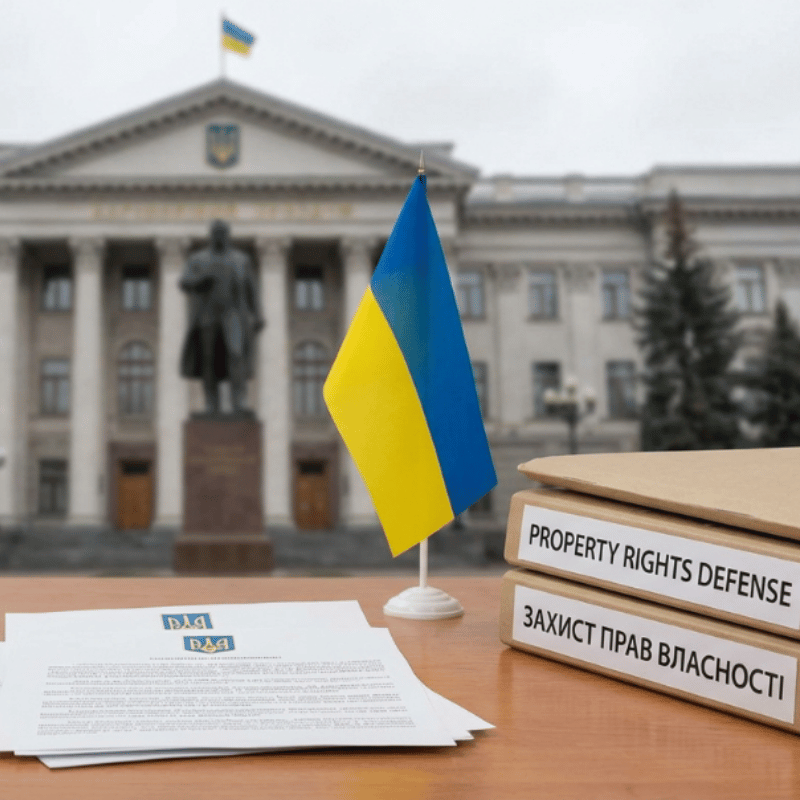
Protection of Property Rights Against Government Claims in Ukraine
According to Ukrainian legislation, the state must ensure equal protection of the rights of all property owners. But what should you do when the state itself brings claims against an individual or a legal entity regarding lawfully acquired property and seeks its expropriation?
What Is Protection of Property Rights Against Government Claims?
A property dispute with the state arises when government bodies or local communities attempt to deprive a person of ownership rights to property (usually real estate). In many cases, property is seized and transferred into state ownership not in full compliance with the law, but with certain procedural violations. This gives the client grounds to seek legal assistance and protect their property rights in court.
Who Needs Protection of Property Rights Against Government Claims?
Protection of property rights against state claims is required by property owners (businesses or individuals) who legally acquired real estate, but later the property became disputed, and the state seeks its confiscation. Such claims may be based on alleged violations during privatization procedures, land plot registration, or the construction of unauthorized buildings. In some cases, property is also expropriated for public needs, particularly for infrastructure development.
Which Government Authorities Can Challenge Property Ownership?
Property ownership may be challenged by the authorities within whose jurisdiction the management and disposal of the property falls. These include territorial communities, city administrations, and the State Property Fund of Ukraine. If these authorities do not consider it necessary to act in the interests of the state, a claim for the recovery of property may be filed by the prosecutor’s office. Depending on the defendant in the case, proceedings may fall under civil or commercial jurisdiction.
How to Verify the Legality of State Claims Against a Property Owner
There is almost always a legal basis for recovering property, as government authorities closely monitor procedural violations. The key issue is whether such a claim is proportionate (legally justified) and whether the statute of limitations has expired. For this reason, even before purchasing property, it is advisable to consult a lawyer and request a legal due diligence check. This can help identify potential risks and weak points in the transaction.
What Evidence Helps Protect Property Rights in Court Against the State
Each property rights defense case is individual, so there are no universal recommendations. Typically, in real estate disputes, all documents related to the history of the property are examined. For example, to prove the good faith of the purchaser, documents from state authorities confirming lawful possession of the property may be used. If the statute of limitations is in question, a property rights lawyer will look for documents confirming when the ownership right was transferred or terminated.
How Property Rights Cases Against the State Proceed in Court
Recognition of property rights in disputes with the state in Ukraine is carried out under the standard requirements of civil procedure (if the defendant is an individual) or commercial procedure (if the defendant is a legal entity). The state files a statement of claim, and the defendant’s lawyer submits a response. During the proceedings, evidence is examined and witnesses are questioned; if necessary, expert examinations may be ordered. Under martial law conditions, the duration of court proceedings is typically between six months and one year.
How to Appeal Illegal Registration, Seizure, Arrest, or a Claim for Property Recovery
A court decision regarding illegal registration, seizure, arrest, or a demand for property recovery can be appealed by filing an appeal. For example, in cases involving the recognition of a government authority’s decision to demolish unauthorized construction as unlawful, the administrative actions of the state can be challenged. Illegal seizure of property is often associated with a form of corporate or real estate fraud rather than state action, where third parties re-register property to a new owner. In such cases, property registration can be challenged in court, including seeking cancellation of the state registration of ownership rights and the return of the property.
What Risks Arise in Court During Disputes with the State?
During disputes with the state, certain risks arise due to the unequal position of the parties. In particular, government authorities may use administrative leverage to delay both the court proceedings and the enforcement of a court decision. The burden of proving the unlawfulness of state actions lies with the defendant and their lawyer. Additionally, during the course of litigation, legislation may change, which can further affect the outcome of the case. To minimize these risks, the “DE-JURE” team regularly analyzes current case law and the recommendations of the Supreme Court of Ukraine.
What Is Included in Legal Support in Property Rights Disputes with the State?
During the initial consultation, a lawyer (attorney) assesses the prospects of the court dispute in communication with the client and develops a defense strategy. This is followed by a detailed review of the available documents, and if necessary, requests for additional documentation are submitted. The attorney prepares evidence for court in accordance with procedural requirements and subsequently represents the client’s interests, defending their property rights during the court proceedings.
What Documents Should Be Provided for a Consultation in State Claims Cases?
In cases involving protection of property against state claims, it is necessary to collect the most complete set of documents; however, this task may also be handled directly by the attorney. At the legal consultation, the client should provide the following documents:
- statement of claim with attachments (if the state, represented by the prosecutor’s office or a local authority, has already filed a claim);
- client’s founding/constituent documents (if applicable);
- documents confirming the origin of the client’s ownership rights to the property (purchase agreement, inheritance documents, donation agreement, etc.).
Additional documents may later be required depending on the specifics of the case.
What Results Can Be Expected from Legal Support in Property Rights Disputes with the State?
In the most favorable scenario, legal support in a property rights dispute with the state results in a court decision rejecting the state’s claim for recovery of the property. A less favorable outcome may include partial satisfaction of the client’s claims on certain non-critical issues.


